
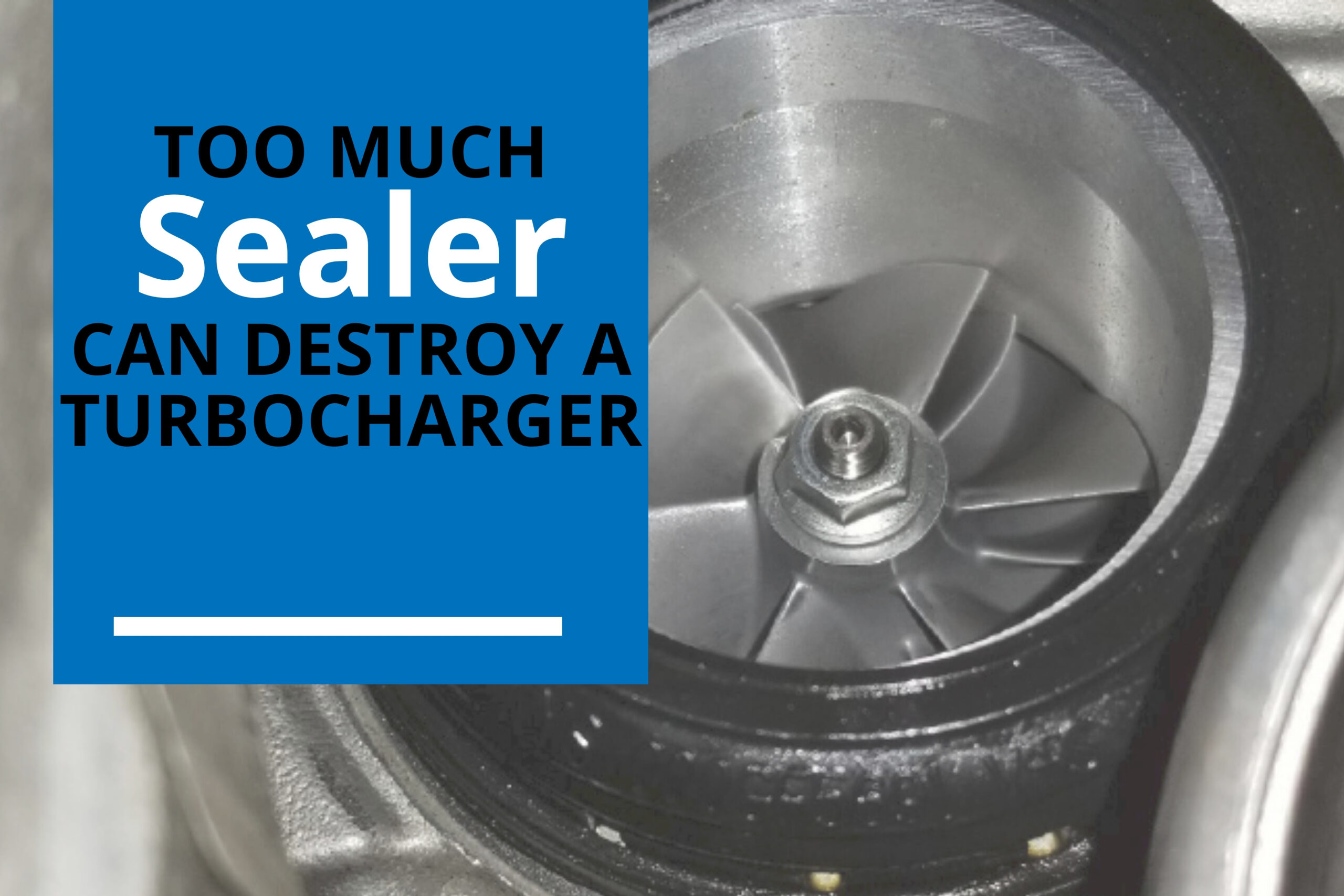
At The Turbo Shop, we regularly inspect turbochargers that have failed due to incorrect installation practices — and one of the most common causes we see is the excessive use of gasket sealer or silicone during assembly.
While sealant is designed to help prevent leaks, using too much can create serious internal problems that may eventually destroy the turbocharger.
The Problem With Excessive Sealer
When excessive silicone or gasket sealer is applied during installation, the extra material is often forced inward once the components are tightened.
Over time, pieces of hardened sealer can break loose and travel through the oil system. These particles can eventually block critical oil feed passages supplying the turbocharger.
Because a turbocharger relies on a constant flow of clean oil for lubrication and cooling, even a small restriction can lead to severe damage.
How It Damages the Turbocharger
Restricted oil flow prevents the turbocharger bearings and shaft from receiving proper lubrication.
This can quickly result in:
Excessive heat buildup
Bearing wear
Shaft damage
Increased friction
Turbo seizure or complete failure
In many cases, the turbocharger itself is blamed, when the actual cause is contamination from excessive sealant used during installation.
Less Is More
Correct turbocharger assembly only requires the proper amount of approved sealant — not excessive application.
At The Turbo Shop, we apply thin, controlled layers only where required according to manufacturer specifications. Using more sealant does not improve sealing; it simply increases the risk of contamination and oil restriction.
Best Practices During Installation
- Use the Correct Sealant
Always use high-quality sealants designed for automotive oil and high-temperature applications.
- Apply Minimal Amounts
Only a thin layer is necessary. Excess product can easily squeeze into oil passages during assembly.
- Keep Oil Passages Clean
Before installation, all oil feed and drain passages should be inspected to ensure they are free from debris or contamination.
- Follow Manufacturer Procedures
Correct installation methods are essential for turbocharger reliability and long-term performance.
Conclusion
Something as small as excessive gasket sealer can lead to catastrophic turbocharger failure. During workshop inspections, blocked oil passages caused by excess silicone are a common — and completely preventable — issue.
At The Turbo Shop, we believe proper installation practices, clean assembly procedures, and attention to detail are essential for protecting turbochargers and ensuring reliable performance.